It also covers the advantages and disadvantages of each property type and the key factors to consider when choosing the most suitable home for your needs and budget.
Choosing the right home depends on several factors, including space, privacy, design, and budget, especially when comparing different residential property types within gated communities.
The difference between a townhouse and a twin house is one of the most common questions people ask before purchasing a new home.
Both property types differ in the number of connected units, outdoor spaces, privacy levels, and overall costs.
In this guide, we explore the main differences between the two property types and highlight their advantages to help you choose the home that best suits your needs and budget.
What Is a Townhouse?
A townhouse is a type of residential property consisting of a group of adjacent homes connected to one another through one or more shared side walls. Each unit has its own private entrance and designated living space.
A townhouse typically consists of two or three floors and includes bedrooms, living areas, and a kitchen. It may also feature a small garden or private outdoor space.
This property type is commonly found in residential compounds, offering a balance between privacy and access to shared facilities and amenities.
It is also a suitable option for families looking for a practical home at a relatively lower cost than some types of detached villas.
What Is a Twin House?
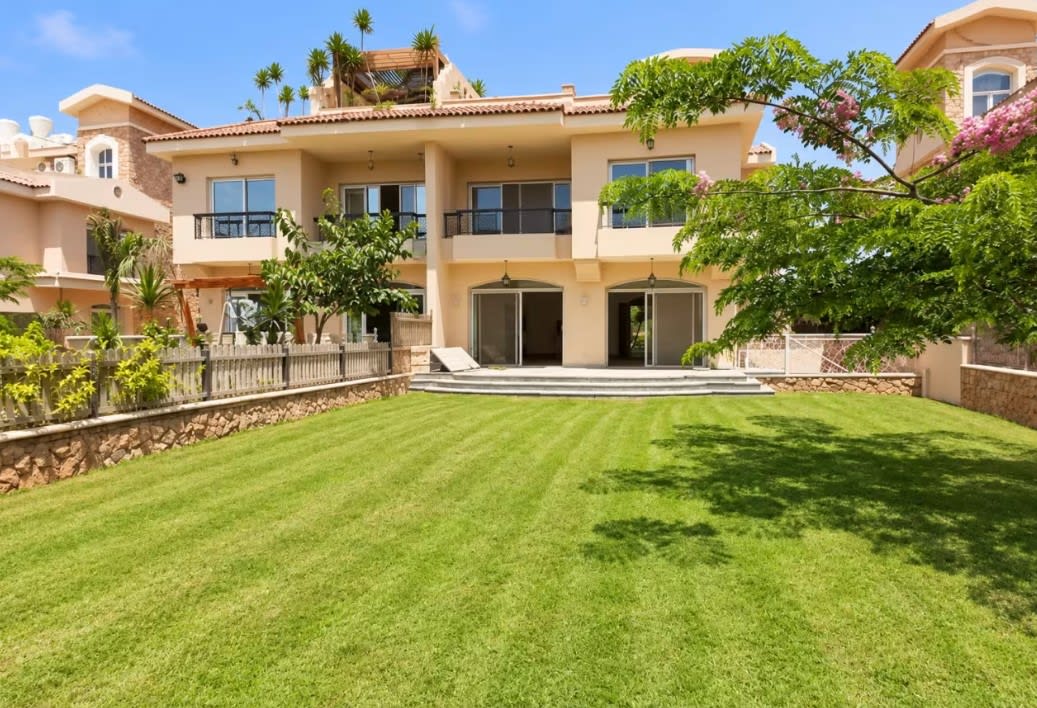
A twin house is a residential property consisting of two neighboring homes that share a single wall. Each home has its own private entrance and designated living space.
A twin house typically offers more space and greater privacy compared to a townhouse, it also usually features a private garden and larger outdoor areas.
It generally consists of two or three floors, including bedrooms, living areas, and a kitchen. A twin house is a suitable option for families looking for the benefits of living in a villa while sharing only one wall with a neighboring unit, making it less expensive in many cases than a fully detached villa.
What Is the Difference Between a Townhouse and a Twin House?
The difference between a townhouse and a twin house lies in the number of connected units, space, privacy, design, and cost.
The following table highlights the main differences between the two property types:
Comparison | Townhouse | Twin House |
|---|---|---|
Design | A group of adjacent homes | Two neighboring homes |
Shared Walls | Usually two side walls | One shared wall |
Privacy | Relatively less privacy | Relatively greater privacy |
Outdoor Space | Usually a limited garden or outdoor area | Usually a larger garden and outdoor area |
Land Area | Relatively smaller in many developments | Relatively larger in many developments |
Adjacent Neighbors | Usually two neighboring units | One neighboring unit |
Price | Generally more affordable | Generally more expensive |
Interior Design | Usually consists of two or more floors | Usually consists of two or more floors |
Suitable For | Families looking for a practical home at an affordable price | Families who prefer more space and privacy |
In short, a townhouse is suitable for buyers looking for a practical home in a residential compound at a relatively lower cost. A twin house, on the other hand, is ideal for those who prefer more space and privacy while enjoying the benefits of villa-style living. However, these specifications may vary from one real estate development to another depending on the design and land area.
Which Is Better for Families: A Townhouse or a Twin House?
Choosing between a townhouse and a twin house depends on the family's size, space requirements, privacy preferences, and budget.
A townhouse is a suitable option for small and medium-sized families looking for a practical home at a relatively lower cost while benefiting from the facilities and amenities available within residential compounds.
A twin house is generally more suitable for larger families that need more indoor space, a private garden, and greater privacy, as it shares only one wall with a neighboring unit. Therefore, if your priority is saving money while enjoying shared community facilities, a townhouse may be the better choice.
However, if space and privacy are among your family's main priorities, a twin house is worth considering.
What Factors Should You Consider Before Buying a Townhouse or Twin House?
Before purchasing a townhouse or twin house, it is important to evaluate several factors to ensure that you choose a property that suits your needs and budget. You should not rely on price or design alone, the most important factors include:
1. Location: Choose a residential compound close to main roads, schools, hospitals, and daily services. Also, consider how easily you can commute to your workplace.
2. Space and Design: Compare the land area, built-up area, number of bedrooms and bathrooms, and floor layouts to determine whether the property suits your family size. 3. Privacy Level: Check the number of shared walls, the unit's location within the compound, and the level of privacy provided by its garden and outdoor spaces.
4. Price and Budget: Compare townhouse and twin house prices, and review payment plans, down payments, installments, and any additional fees.
5. Facilities and Amenities: Make sure the compound offers essential facilities such as green spaces, security, parking areas, recreational zones, and other services.
6. Construction and Finishing Quality: Inspect the quality of building materials, finishing, and structural design. If the property is previously owned, check its overall condition. 7. Real Estate Developer: Research the developer's track record, previous projects, and commitment to delivery deadlines.
8. Legal Documents: Review the ownership contract, building permits, and legal status of the property. Make sure all contractual and delivery terms are clear.
Comparing these factors will help you determine whether a townhouse or twin house is the better option based on your family's needs and long-term financial capabilities.
How Do You Choose the Right Property for Your Needs and Budget?
To choose the right property between a townhouse and a twin house, you should identify your needs, establish your budget, and compare the available options before making a purchase decision.
The following steps can help you find the most suitable home for you and your family: 1. Determine Your Family's Needs: Calculate the number of bedrooms, bathrooms, and living spaces you need based on your family size.
2. Choose the Right Space: If you need a practical living space, a townhouse may be suitable. However, if you prefer a larger home and a more spacious garden, a twin
house may be the better option.
3. Set Your Budget: Establish a clear budget that covers the property price, down payment, installments, maintenance fees, and additional expenses.
4. Compare Locations and Compounds: Choose a location close to schools, universities, hospitals, and main roads.
5. Review the Layout and Interior Design: Make sure the rooms are well distributed, the available space is efficiently used, and there are suitable areas for family activities and everyday living.
6. Balance Price and Privacy: Decide whether the additional space and privacy offered by a twin house justify the price difference based on your needs.
7. Inspect the Property Before Buying: Check the construction quality, finishing, and facilities, and review all legal documents and contractual terms.
Ultimately, the best choice does not depend solely on the property type but on how well it matches your family's needs and financial capabilities.
Therefore, make sure to compare several real estate developments before making your final purchase decision.
How Does the Design of a Townhouse Differ from a Twin House?
The design of a townhouse differs from that of a twin house in terms of unit arrangement, indoor and outdoor spaces, the number of shared walls, and the level of design
independence. The main differences can be explained through the following points:
1. Building Structure: A townhouse consists of a row of adjacent homes, while a twin house consists of only two neighboring homes.
2. Shared Walls: A townhouse usually shares two side walls with neighboring units, while a twin house shares only one wall.
3. Exterior Facades: Townhouses typically feature similar and repeated designs, while twin houses offer more independent facades for each home.
4. Side Spaces: Side spaces in townhouses are usually limited, whereas twin houses generally offer larger side areas that allow better ventilation and natural lighting.
5. Private Garden: Both property types may include a private garden, but twin houses generally offer larger outdoor spaces.
6. Interior Layout: Both types usually consist of multiple floors to maximize available space, with room distribution and sizes varying according to the architectural design. In general, a townhouse is suitable for people who prefer practical designs and efficient use of space, while a twin house is ideal for buyers looking for larger side areas and additional privacy. However, specifications may vary from one real estate development to another.
How Does the Cost of Buying a Townhouse Differ from a Twin House?
The cost of buying a townhouse or twin house varies depending on the unit's size, its location within the compound, architectural design, finishing level, and available facilities.
In general, townhouses are relatively more affordable than twin houses due to their smaller land areas in many developments and the higher number of adjacent units. Twin houses, on the other hand, are often more expensive because they typically offer larger land areas, more spacious gardens, and greater privacy.
Several factors affect the price of each property type, including:
1. Land and Built-up Area: The larger the land and built-up areas, the higher the property's overall value.
2. Location Within the Compound: Prices vary depending on how close the unit is to entrances, facilities, green spaces, and recreational areas.
3. Design and Privacy: A twin house may be more expensive due to its more independent design and fewer shared walls.
4. Finishing Level: Costs vary depending on whether the unit is semi-finished, fully finished, or delivered without finishing.
5. Payment Plans: The down payment, installment period, and available discounts all affect the final purchase cost.
6. Real Estate Developer: The developer's reputation, construction quality, and project location can influence the market value of the units.
Therefore, it is recommended to compare townhouse and twin house prices within the same development while reviewing their sizes, specifications, and payment plans. This will help you find the option that offers the best balance between price and your housing needs.
What Are the Advantages and Disadvantages of Living in a Townhouse?
A twin house is a suitable residential option for families looking for more space and greater privacy within gated communities.
It combines some of the benefits of detached villas with a relatively lower purchase cost in many developments. However, there are some disadvantages to consider before making a purchase decision:
Advantages | Disadvantages |
Greater Privacy: The home shares only one wall with a neighboring unit. | Higher Purchase Price: It is generally more expensive than a townhouse due to its larger land area and greater privacy. |
Larger Private Garden: Offers outdoor space suitable for relaxation and family activities. | Maintenance Costs: Maintaining the garden and outdoor spaces may increase expenses. |
More Indoor Space: Many developments offer larger areas suitable for bigger families. | Higher Furnishing and Finishing Costs: Larger spaces require an additional budget for furnishing and preparation. |
Natural Ventilation and Lighting: More open facades and side spaces allow better access to natural light and fresh air. | Shared Wall: Acoustic privacy may still be affected depending on the quality of sound insulation and construction. |
More Independent Design: Each home has its own entrance, facade, and private space. | Fewer Available Options: Some developments may offer fewer twin houses compared to townhouses. |
Suitable for Families: Offers greater flexibility in room distribution and space utilization. | Compound Fees: Owners still need to account for maintenance fees and shared community services. |
In conclusion, a twin house is suitable for families looking for more space, a private garden, and additional privacy. However, it generally requires a higher budget for purchasing, finishing, and maintenance compared to a townhouse. Therefore, it is important to compare the actual specifications and costs of available units before making a decision.
Not sure which option fits your budget and needs? Contact us and the Regypt team will walk you through the shortlist.