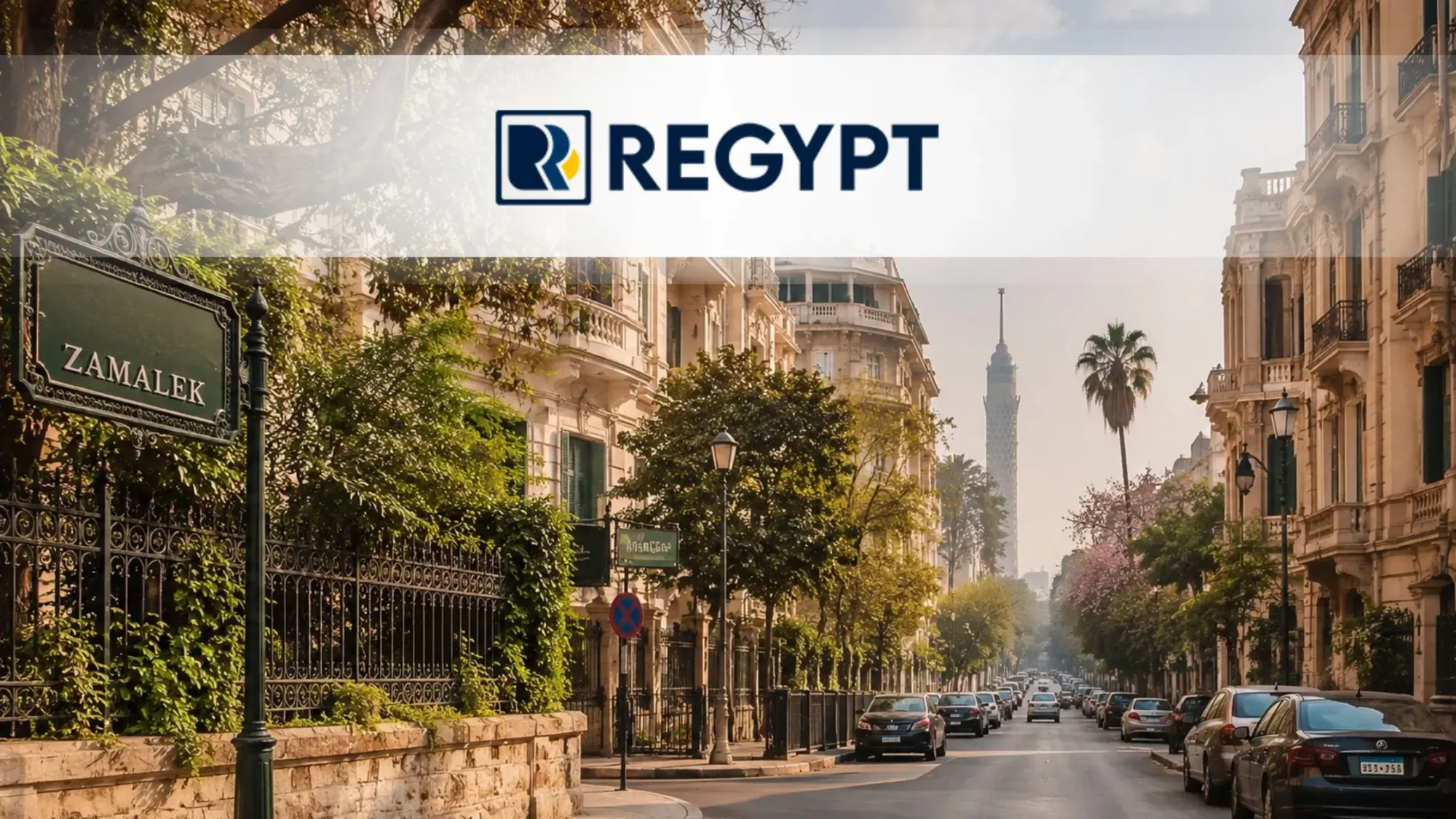
What sets Zamalek apart from every other Cairo district is not its architecture or its river frontage. It is simpler and harsher: the land area is fixed. An island bounded by water on all sides, with no vacant plots released for development and strict limits on demolishing buildings of distinguished architectural character. The result is that Zamalek Real estate supply does not grow through construction the way it does in the new cities. It moves only through turnover: one unit sold, another released, and nothing more.
That single fact explains most of the market behavior here, and why conventional supply-and-demand logic maps poorly onto Zamalek Real estate.
Institutional demand, Not Only Individual
In most districts, demand is individual and residential. In Zamalek, an institutional layer sits behind it: diplomatic missions, international organisations, representative offices of foreign companies, plus an active cultural sector of galleries and design studios. This segment leases for longer terms on clearer conditions, but imposes specific standards: a working lift, a generator, round-the-clock security, and parking. A unit lacking these drops out of the strongest tenant pool automatically, whatever its address.
Three Layers Inside One Zamalek Real Estate Market
Buildings here fall into three layers that should never be valued as one product:
Heritage stock from the 1930s and 1940s, with high ceilings and rare interior proportions, but façade restrictions and utility networks needing deep renewal.
1960s–1970s buildings, less ornamental and more practical, usually easier to reconfigure internally.
Limited modern replacement, small in number by law, offering what the other two lack: garage space and modern electrical capacity.
The common error is comparing units from two different layers as if they were the same asset.
Five Insights Most Buyers Miss
First, you are buying a building, not a flat.
In Zamalek Real estate specifically, the condition of the lift, the roof, the main drainage risers, and the effectiveness of the owners' association affect lettability more than the unit's own finish. Excellent interiors inside a neglected building lose their effect within a year.
Second, interior street versus main corridor.
Units on the major corridors gain accessibility and lose quiet; shaded interior streets reverse that. This is not better versus worse but a match to occupier type: families choose quiet, offices choose visibility and access.
Third, parking is the governing constraint.
It is the island's biggest practical limitation, and the first factor that removes otherwise excellent units from institutional shortlists.
Fourth, renovation has limits.
Buildings of distinguished character are restricted in altering façades, balconies, and windows, and much of the older stock relies on load-bearing walls that cannot simply be removed. Any renovation plan must start from a structural assessment, not a design concept.
Fifth, the old-rent legislative shift.
A meaningful share of the island's stock stayed out of circulation for decades under legacy rent contracts. The recent legislative direction toward unwinding that position through transitional periods is the most significant change to the supply structure in many years, gradual rather than sudden, and worth tracking closely by anyone following Zamalek Real Estate.
Methodology note: legislative and regulatory positions are subject to update. Verify the framework in force at the time of contracting with a qualified professional.

A Pre-Signature Zamalek Real Estate Checklist
Registration status of the unit and the full chain of prior contracts, not the latest one alone.
Heritage listing status of the building and its effect on any future external alteration.
Use classification: a residential unit is not automatically fit for office use or short-stay hospitality without the required permits and approvals.
A technical report on shared services: lift, risers, waterproofing, and façade.
Talk to Regypt About Zamalek Real Estate
Choosing correctly on the island starts with understanding the building, the street, and the legal position before anything else. The Regypt team gives you a technical inspection, a preliminary legal read, and an updated shortlist matched to your purpose: home, investment, or business premises. Contact us today to book a free consultation.
Conclusion
Zamalek is not a market to be judged by new-development logic. It is a fixed pool of stock recycled between generations of owners. Whoever understands that equation looks for the right building, the right street, and a clean legal position, and leaves surface-level comparisons to others. That is precisely what separates those who succeed in Zamalek Real estate from those who simply admire it from the outside